
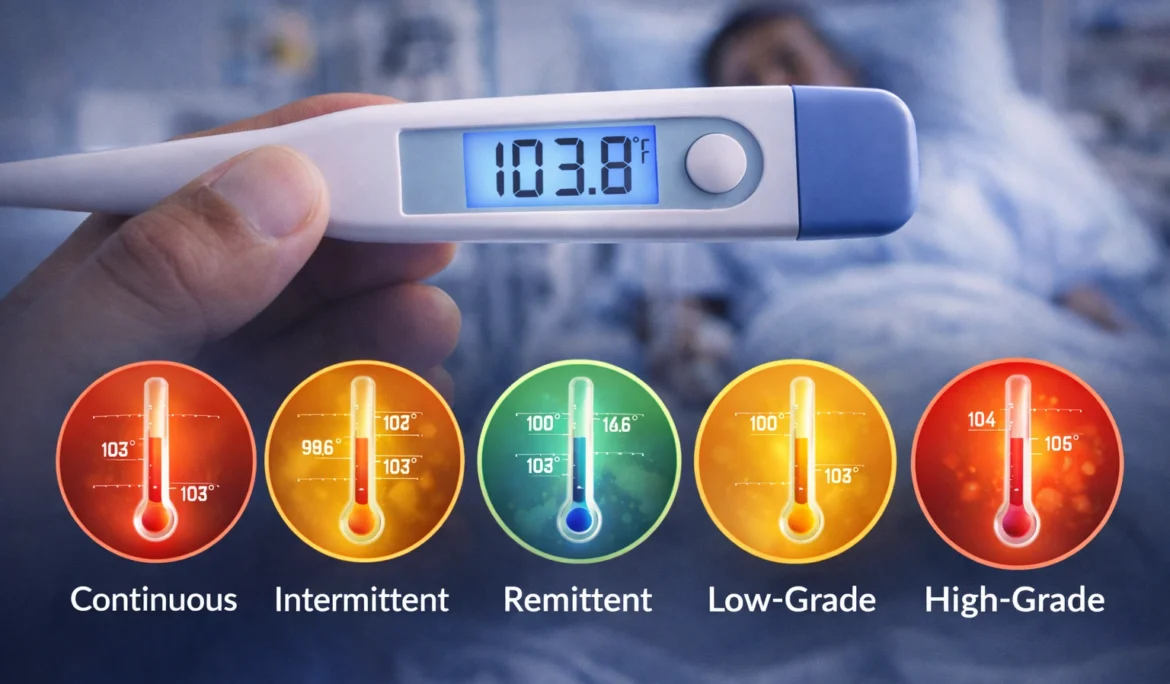
Fever is not a disease. It is the body’s most precise biological alarm system. A healthy human body maintains a core temperature close to 37°C (98.6°F). Even a small rise signals that the immune system has detected infection, inflammation, or another internal disturbance and has activated defense mechanisms. In clinical practice, a temperature above 38°C (100.4°F) is considered fever.
Globally, fever accounts for over 25–30% of all outpatient visits, making it one of the most common reasons people seek medical care. Yet not all fevers behave the same way. The pattern, duration, and intensity of fever often reveal the underlying cause even before laboratory tests are performed.
Understanding the type of fever helps doctors quickly identify whether the condition is viral, bacterial, inflammatory, or systemic, allowing faster and more accurate treatment.
Continuous Fever
Continuous fever refers to a sustained high temperature that remains elevated throughout the day with very little fluctuation, usually less than 1°C variation. The temperature rarely returns to normal without medication. This pattern is commonly seen in bacterial infections such as typhoid or severe respiratory infections. Because the body remains under constant inflammatory stress, patients may experience persistent weakness, headache, and body ache. Early medical evaluation ensures timely antibiotic or targeted therapy and faster recovery.
Intermittent Fever
Intermittent fever follows a cycle where the temperature rises for several hours and then returns to normal before increasing again. The body experiences clear fever-free intervals. This pattern is classically associated with malaria and certain bloodstream infections. The periodic rise reflects the life cycle of the infecting organism. With correct diagnosis and treatment, symptoms resolve quickly and energy levels improve significantly.
Remittent Fever
In remittent fever, the temperature stays above normal throughout the day but fluctuates widely, often by more than 1–2°C. It never fully settles to baseline. This pattern is frequently seen in viral illnesses, dengue, infective endocarditis, or inflammatory disorders. Although symptoms may vary in intensity, medical monitoring ensures that hydration, electrolytes, and infection control remain stable, preventing complications and supporting smooth recovery.
Low-Grade Fever
Low-grade fever typically ranges between 37.5–38°C and may persist for several days or weeks. It often appears mild but can signal early infection, autoimmune conditions, or chronic inflammation. Many patients continue daily activities with only slight fatigue or discomfort. Identifying the underlying cause through clinical examination and tests ensures that small issues do not progress into larger health concerns. Prompt attention leads to faster resolution and sustained wellness.
High-Grade Fever
High-grade fever rises above 39–40°C and is often accompanied by chills, intense body ache, and dehydration. Conditions such as influenza, pneumonia, urinary infections, or viral fevers may present this way. With modern medical care, including fluids, antipyretics, and targeted treatment, the body stabilizes quickly. Immediate consultation helps prevent strain on the heart and brain and ensures safe, controlled recovery.
Step-Ladder Fever
Step-ladder fever shows a gradual daily rise in temperature, increasing slightly each day before reaching a peak. This progressive pattern is strongly associated with typhoid fever. Because the increase is systematic rather than sudden, early diagnosis and proper therapy result in predictable and complete recovery. Recognizing this pattern allows physicians to start treatment even before advanced investigations.
Relapsing Fever
Relapsing fever occurs when fever episodes appear for several days, disappear completely, and then return again. This cycle may repeat multiple times. It is typically linked with certain bacterial or parasitic infections. With accurate diagnosis and antimicrobial therapy, the body clears the infection effectively, and relapses stop.
Why Fever Pattern Recognition Matters
Experienced physicians rarely look at temperature alone. They analyze timing, fluctuation, associated symptoms, travel history, and clinical signs. Fever patterns often guide diagnosis faster than laboratory tests. Early identification allows immediate treatment, shorter illness duration, and reduced complications.
Medical guidelines from the World Health Organization and the Centers for Disease Control and Prevention emphasize that structured evaluation of fever improves outcomes significantly, especially in children, elderly patients, and those with chronic diseases.
When Should You Seek Medical Care for Fever?
Fever that persists beyond three days, rises above 39°C, or is associated with breathlessness, confusion, persistent vomiting, severe weakness, or dehydration requires prompt medical attention. In children, pregnant women, and elderly patients, early consultation ensures safer and faster management.
Fever is the body’s protective response, not a threat. Each pattern carries valuable information that helps doctors deliver precise, evidence-based care. With modern diagnostics and treatment, most fevers resolve quickly and completely.