
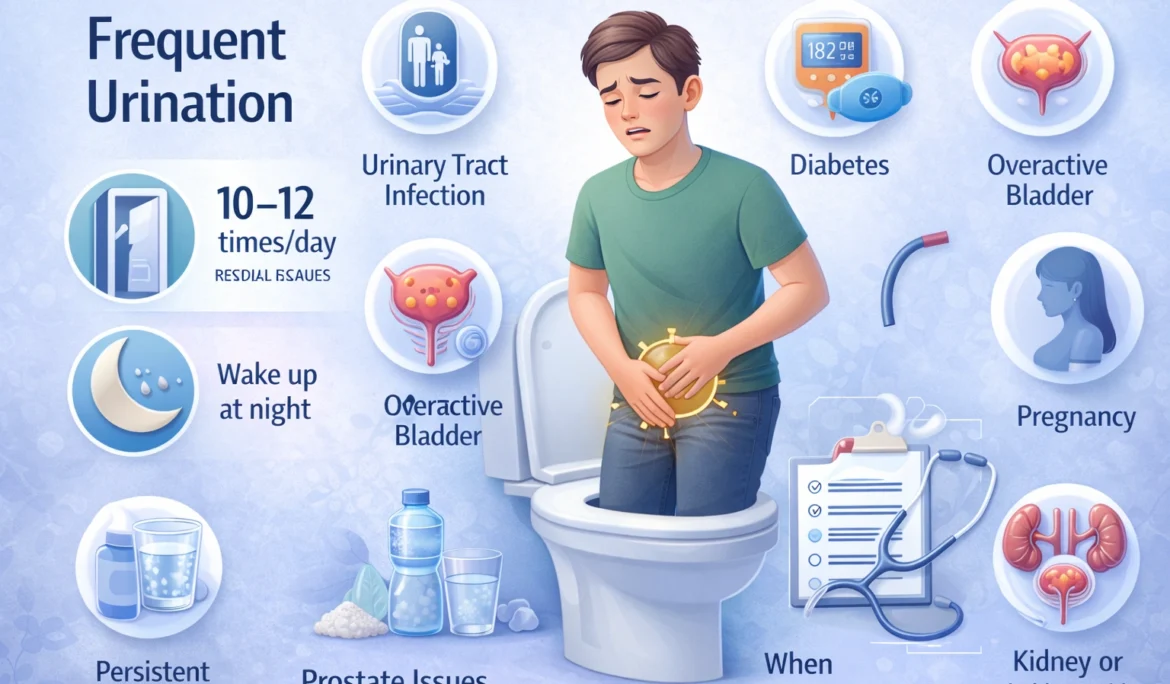
Needing to urinate frequently may seem like a small inconvenience, but medically, it can sometimes signal an underlying health issue. On average, a healthy adult urinates 6–8 times a day, depending on fluid intake. However, if you find yourself visiting the washroom more than 10–12 times daily or waking up multiple times at night to pass urine, it may indicate a condition that needs medical evaluation.
According to urology and primary care data, urinary complaints account for nearly 20–30% of outpatient visits, especially among women, elderly individuals, and patients with diabetes. While occasional frequency is normal after high water intake, persistent frequent urination should not be ignored.
Understanding the cause is the first step toward the right treatment.
What is Frequent Urination?
- Frequent urination means:
- Passing urine more often than usual
- Feeling the urge repeatedly even when little urine comes out
- Waking up at night to urinate (nocturia)
- Disruption of daily routine or sleep
It is different from simply drinking more water. The key concern is urgency and repetition, not volume.
Common Causes of Frequent Urination
Not all cases are serious. Some are temporary, while others may need medical care.
1. Urinary Tract Infection (UTI)
One of the most common causes, especially in women.
Symptoms include:
- Burning while urinating
- Frequent urge
- Lower abdominal pain
- Cloudy or foul-smelling urine
UTIs require antibiotics and proper treatment to prevent complications.
2. Diabetes (High Blood Sugar)
Frequent urination is often an early warning sign of diabetes.
- When blood sugar rises:
- Kidneys try to flush excess glucose
- More urine is produced
- Increased thirst + frequent urination occurs together
If you notice both symptoms, get blood sugar tested immediately.
3. Overactive Bladder (OAB)
This condition causes sudden urgency even when the bladder isn’t full.
Common signs:
- Sudden urge to urinate
- Difficulty holding urine
- Frequent bathroom visits
- Possible leakage
- Lifestyle changes and medication help control symptoms.
4. Increased Fluid or Caffeine Intake
Drinking large amounts of:
- Water
- Tea/coffee
- Alcohol
- Soft drinks
can temporarily increase urination. Caffeine acts as a natural diuretic.
5. Pregnancy
During pregnancy:
- Hormonal changes occur
- Growing uterus presses on bladder
This naturally increases urinary frequency. It is usually normal but should be monitored.
6. Prostate Enlargement (Men)
In men above 45–50 years, an enlarged prostate can block urine flow.
Symptoms include:
- Weak stream
- Dribbling
- Frequent urination
- Night-time urination
Urological consultation is important.
7. Anxiety or Stress
Mental stress stimulates nerves controlling the bladder, causing frequent urges even without infection.
8. Kidney or Bladder Conditions
Stones, inflammation, or bladder irritation may also cause frequent urination and pain.
When is Frequent Urination NOT Normal?
Consult a doctor immediately if you notice:
- Burning or pain while urinating
- Blood in urine
- Fever or chills
- Lower abdominal or back pain
- Sudden increase in frequency
- Urine leakage
- Waking up multiple times at night regularly
- Increased thirst + weight loss
These signs may indicate infection, diabetes, or kidney problems.
Simple Tips to Reduce Mild Urinary Frequency
If symptoms are mild and temporary, try:
- Stay hydrated, but don’t overdrink
- Drink normal amounts (2–2.5 liters/day). Avoid excessive fluids.
- Limit caffeine & alcohol
- They irritate the bladder and increase urgency.
- Bladder training
- Gradually increase time between urination to improve bladder control.
- Pelvic floor exercises (Kegels)
- Helpful especially for women and elderly patients.
- Manage blood sugar
- Diabetic patients must maintain proper sugar control.
Medical Treatment Options
If symptoms persist, your doctor may recommend:
- Urine tests
- Blood sugar tests
- Ultrasound
- Bladder function tests
- Medication for OAB
- Antibiotics for infection
- Prostate treatment (men)
Proper diagnosis ensures targeted treatment rather than guesswork.
Why You Shouldn’t Ignore Frequent Urination
Many people assume “it’s normal” and delay treatment. But untreated urinary issues can lead to:
- Kidney infection
- Bladder damage
- Severe UTI
- Uncontrolled diabetes complications
- Sleep disturbance & fatigue
Early diagnosis makes treatment simple and effective.
When to See a Specialist?
If symptoms last more than 2–3 days or affect daily life, consult a doctor. A qualified physician or urology specialist can quickly identify the cause and provide the right treatment.