A small swelling in the abdomen or groin may not look serious at first, but medically, it could be a hernia — a condition that affects millions of people worldwide every year. Studies suggest that over 20% of adults develop some form of abdominal hernia during their lifetime, and in India, hernia repair remains one of the most commonly performed general surgeries. While early hernias may cause only mild discomfort, delaying treatment can lead to severe pain, obstruction, or even life-threatening complications. The good news is that modern hernia surgery is safe, minimally invasive, and offers quick recovery with excellent long-term results.
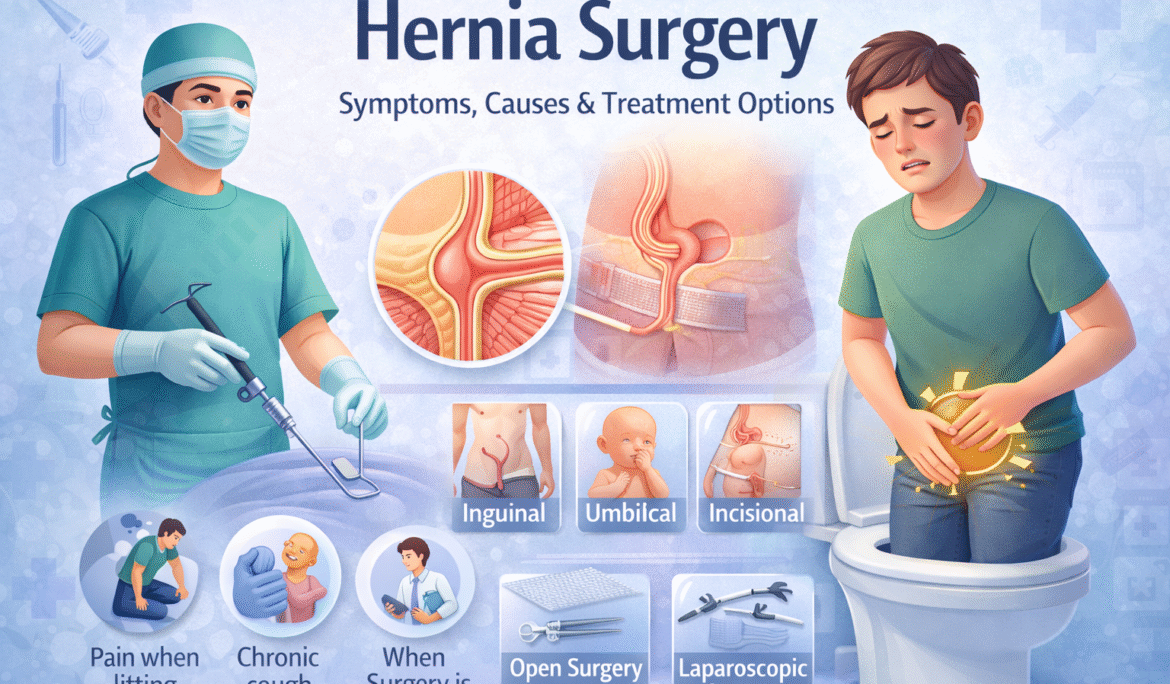
A hernia occurs when an internal organ or tissue pushes through a weak spot in the surrounding muscle or abdominal wall. This creates a visible bulge or lump, often accompanied by pain or heaviness, especially while coughing, lifting weight, or straining. The most common types include inguinal (groin), umbilical (near the belly button), incisional (after previous surgery), and hiatal hernia (upper stomach region). Among these, inguinal hernia is the most frequent, particularly in men.
In many patients, hernia starts silently. Initially, there may only be mild swelling that disappears while lying down. However, as the muscle weakness increases, the bulge becomes more noticeable and discomfort worsens. Patients often describe a dragging sensation, pressure, or pain during physical activity. Ignoring these signs is risky because untreated hernias do not heal on their own. Instead, they gradually enlarge over time and may trap the intestine, causing a serious condition known as strangulation, which requires emergency surgery.
Several factors increase the risk of developing a hernia. Chronic coughing, constipation, heavy lifting, obesity, pregnancy, previous abdominal surgery, and aging muscles are common contributors. Conditions that increase abdominal pressure repeatedly can weaken the muscle wall and allow tissues to protrude. This is why hernias are more common in individuals involved in manual labor, elderly patients, and those with lifestyle risk factors.
When it comes to treatment, medications or exercises cannot permanently fix a hernia. Support belts may temporarily reduce discomfort but do not address the root problem. The only definitive treatment is surgical repair. Hernia surgery aims to push the protruding tissue back into place and strengthen the weak muscle area, usually with the help of a surgical mesh that prevents recurrence.
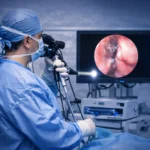
Today, hernia surgery has advanced significantly. Open hernia repair is the traditional method, where a small incision is made to correct the defect directly. It is effective and widely performed, especially for larger hernias. Laparoscopic or keyhole surgery, on the other hand, uses tiny cuts and a camera to repair the hernia internally. This minimally invasive approach causes less pain, smaller scars, shorter hospital stay, and faster recovery, making it a preferred option for many patients. In selected cases, robotic hernia surgery may also be recommended for greater precision.
Most hernia surgeries are completed within one to two hours and are often done as day-care or short-stay procedures. Patients usually return home the same day or within 24 hours. Recovery is smooth, with light activities possible within a few days and full recovery typically achieved within two to four weeks, depending on the technique used and the patient’s overall health.
It is important to consult a doctor if you notice a persistent swelling, pain while lifting or bending, nausea, vomiting, or sudden severe abdominal pain. These could indicate complications that need immediate attention. Early surgical repair not only prevents emergencies but also ensures better comfort and quicker healing.
Choosing the right hospital and experienced surgeon plays a crucial role in successful outcomes. A well-equipped super specialty hospital offers advanced diagnostics, laparoscopic facilities, experienced surgeons, and comprehensive post-operative care, ensuring minimal complications and long-term results. Modern hernia surgery today is safe, effective, and helps patients return to normal life faster than ever before.
In summary, a hernia may start small, but it should never be ignored. Timely diagnosis and surgical treatment provide permanent relief, prevent complications, and improve quality of life. If you or a loved one notice symptoms of hernia, consulting a specialist early can make the treatment simpler and recovery quicker.